
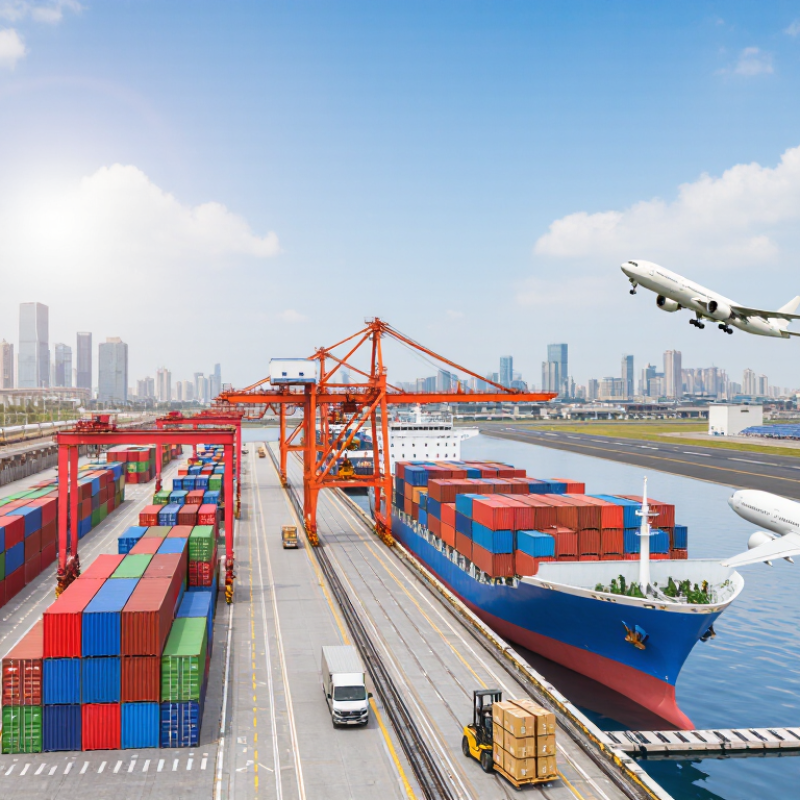
Choosing Delivery Logistics from China can determine whether goods arrive predictably or stall between ports, warehouses, and customs. The right service depends on cargo size, delivery deadline, destination, budget, and the tracking visibility a buyer needs. Ocean freight often suits larger, less urgent consignments; air freight can serve lighter, time-sensitive cargo at a higher transport cost. Rail and multimodal services may offer another balance, depending on route availability and final-mile access. A carton of samples and a pallet of machine parts rarely need the same service. Small details matter.
Industry data helps explain why no single route fits every order. UNCTAD’s Review of Maritime Transport 2024 notes that maritime shipping carries over 80% of global trade by volume. That scale underscores ocean freight’s importance, but does not make it the best option for every shipment. The World Bank’s Logistics Performance Index 2023 compares countries across customs, infrastructure, shipment arrangements, logistics competence, tracking, and timeliness. These measures offer useful context, but a national score cannot predict how a specific carton will be handled. The WTO reported that merchandise trade volume contracted 1.2% in 2023 and projected 2.6% growth for 2024 in its April 2024 outlook. Shifting conditions make current capacity checks important.
This guide explains how to compare transit time, total landed cost, reliability, and customer support before booking. Request comparable quotes using the same cargo dimensions, weight, pickup address, and delivery terms. Check whether fuel, handling, and last-mile charges are included. A polished quote may still leave gaps. Even experienced buyers can misjudge the buffer needed for a delayed sailing or missed connection, so careful planning helps—but cannot remove uncertainty.
Before comparing delivery options from China, define what the shipment actually requires. Record the product type, carton count, outer dimensions, gross weight, pickup city, and delivery postcode. A 40-kilogram carton can cost more than expected if its size triggers volume-based pricing. Measure it twice. Note whether the goods need protection from moisture, stacking pressure, or repeated handling, and whether the delivery location has limited unloading access.
Next, rank your priorities: speed, total cost, predictable arrival, or careful handling. An urgent restock may justify a faster service, while routine inventory may suit a slower route with a lower freight cost. Time matters. Compare door-to-door estimates, not just travel time between ports or airports. Ask what each estimate includes, such as pickup, customs processing, local delivery, and any stated surcharges. Port delays happen, and a quoted transit window is not always a guaranteed arrival date.
Set practical boundaries before requesting quotes. If stock must arrive before a launch, choose a latest acceptable delivery date and leave room for unexpected delays. If a small delay is manageable, avoid paying extra for speed you may not need. Provide consistent shipment details to each provider; changing carton sizes later can make earlier quotes unreliable. A low quote can still be the wrong choice if it excludes services you need. I would revisit the priorities after the first shipment, because estimates rarely capture every handling delay.
How to Choose the Best Delivery Logistics from China?
Air, sea, rail, and express shipping solve different problems. Sea freight suits bulky, non-urgent cargo, but port handling and sailing schedules require patience. UNCTAD’s Review of Maritime Transport 2024 notes that over 80% of global trade by volume moves by sea. Air freight is faster for valuable or time-sensitive goods, though costs rise with chargeable weight. IATA reported global air cargo demand growth of 11.3% in 2024, measured in cargo tonne-kilometers. Strong demand can affect space and rates. Rail can offer a middle ground on China–Europe routes, but transit times depend on schedules and border handoffs. Express works well for small parcels needing door-to-door service. Convenient, but often costly per kilogram.
Tips: Compare the full landed cost, not just the freight quote. Check dimensional weight, pickup and delivery fees, insurance, customs clearance, and estimated transit time. Ask whether the quoted schedule includes weekends or port delays. A spreadsheet can still mislead: one missed cutoff may outweigh a lower rate. Match the service to your delivery deadline, shipment size, and tolerance for uncertainty.
| Comparison Factor | Air Freight | Sea Freight | Rail Freight | Express Shipping |
|---|---|---|---|---|
| Typical transit time | About 5–10 days airport to airport on many major routes. Door-to-door delivery takes longer. | About 20–40 days port to port on many major routes; schedules and congestion can extend the journey. | About 15–25 days on some China–Europe rail routes, typically terminal to terminal. | About 3–7 business days for many international destinations, subject to customs and destination coverage. |
| Relative transportation cost | High; usually less expensive than express for comparable air cargo, but more costly than sea or rail. | Usually the lowest cost per unit for large, non-urgent shipments, especially full containers. | Generally between sea and air freight; pricing depends on route, service, and cargo. | Usually the highest per-unit cost, particularly for bulky or heavy shipments. |
| Best suited to | Time-sensitive, higher-value cargo that is too large or heavy for typical parcel services. | Large or heavy shipments that can tolerate a longer journey. | Shipments moving between China and destinations served by established rail corridors, especially Europe. | Small parcels, samples, documents, and urgent shipments requiring door-to-door service. |
| Shipment size and handling | Suitable for a wide range of cargo sizes; charges may use actual or volumetric weight. | Suitable for container loads and smaller consolidated shipments; loading and unloading add handling steps. | Often available as container or consolidated cargo; availability depends on the route and terminal network. | Convenient for parcels and smaller cartons; size, weight, and commodity restrictions may apply. |
| Route availability | Broad international airport network, but routing may involve connections and local trucking. | Broad global port network; inland delivery is arranged separately or included in a door-to-door service. | More limited than sea or air; most useful on established land corridors and connected inland routes. | Broad parcel network in many countries, with service coverage varying by destination and shipment type. |
| Tracking and delivery | Tracking is generally available at major transport milestones; final delivery may require a separate carrier. | Container tracking is available, but updates may be less frequent during the ocean leg. | Tracking is available through key rail and terminal milestones; cross-border handoffs can affect updates. | Typically provides detailed, frequent parcel tracking and door-to-door delivery. |
| Environmental considerations | Generally produces higher transport emissions per tonne-kilometre than sea or rail. | Generally has lower transport emissions per tonne-kilometre than air freight, especially for well-utilized vessels. | Generally produces lower transport emissions per tonne-kilometre than air freight; results depend on the route and energy mix. | Often relies on air transport and time-critical sorting networks; emissions depend on routing, load, and delivery distance. |
| Key planning considerations | Check chargeable weight, flight availability, cargo restrictions, and customs clearance requirements. | Allow for port schedules, container availability, port congestion, customs, and inland transport. | Confirm the route, terminal locations, border procedures, and whether door-to-door transport is included. | Check destination coverage, parcel limits, duties and taxes, and any restricted-goods rules. |
Note: Transit times are indicative estimates, not guarantees. Actual delivery times and costs depend on the origin and destination, shipment dimensions and weight, service level, customs clearance, and current transport conditions. Confirm a current, door-to-door quote before booking.
Choosing delivery logistics from China starts with a clear view of the cargo: its dimensions, weight, pickup location, and required arrival date. Ask each provider for a written quote that separates transport, handling, storage, and destination charges. A low headline rate can hide fees that appear later. Small details matter.
Compare routes against the shipment’s actual priorities. Ocean freight often suits larger, less urgent loads, while air freight can reduce transit time at a higher cost. Rail or combined services may fit some routes, but schedules and transfers vary. Ask where cargo changes hands, how delays are reported, and whether the quoted timeline includes customs processing. A route map is useful; a dated schedule is better.
Reliability is more than a promise. Request recent on-time performance data, tracking examples, and a clear process for damaged or delayed freight. Check how quickly staff answer a practical question, such as who contacts the warehouse if a pickup misses its window. If the shipment is valuable or time-sensitive, test the service with a small load first. Forecasts can still shift, especially around busy shipping periods; no checklist catches everything. Keep written records of agreed dates, cargo details, and update intervals.
A low freight quote can hide costly gaps. Compare the full landed cost, not just the ocean or air rate. Add pickup, export handling, freight, insurance, destination fees, customs brokerage, duties, taxes, and final delivery. Ask whether charges are fixed or estimated. They often shift.
For example, a 40-kilogram carton may incur a minimum handling fee even when its freight rate looks small. Keep each quote tied to the same shipment weight, dimensions, delivery address, and service level.
Transit time needs similar scrutiny. A published 12-day route may exclude warehouse waiting, customs review, and last-mile scheduling. Request a door-to-door estimate and ask which milestones are included. Use a realistic buffer; seasonal congestion can upset tidy spreadsheets.
Customs duties depend on destination rules, product classification, declared value, and origin. Check current official tariff guidance or consult a qualified customs professional before budgeting. It is tempting to treat a spreadsheet as exact, but it is only an estimate. Small local fees can still be missed, so leave room to revise the plan.
Before comparing delivery options from China, ask who prepares each required shipping document and when it must be ready. Request a checklist covering the commercial invoice, packing list, and transport document. Check that product descriptions, carton counts, weights, values, and consignee details match across records. Small mismatches can delay clearance or require costly corrections. Paperwork matters. Confirm who fixes errors and whether document changes incur extra fees.
Tracking should show more than “shipped” and “in transit.” Ask which milestones are visible, such as warehouse pickup, export departure, arrival, and final delivery. Find out how often updates appear and whom to contact if scans stop. A quiet tracking page does not always mean a lost shipment, but it deserves a prompt check. Keep the shipment reference and agreed delivery window handy.
Discuss disruptions before cargo moves. Ask what happens if a sailing is missed, a port becomes congested, or weather delays a handoff. Get clear answers on notification timing, storage charges, rerouting approval, and who pays added costs. Check what the quoted insurance covers; it may not cover every delay or expense. Plans can look tidy on paper and still miss a real-world snag, so record the contact path and decisions in writing.
Sea freight often suits large loads with flexible arrival dates. Allow time for port handling and sailing schedules.
It can help when goods are valuable or time-sensitive. Costs may rise with chargeable weight, so check dimensions carefully.
Rail may balance cost and speed on some China–Europe routes. Schedules and border handoffs can vary. Schedules shift.
Express can suit small parcels that need door-to-door service. It is convenient, but often costly per kilogram.
Check pickup, delivery, handling, storage, insurance, customs clearance, and destination charges. Dimensional weight matters too. Small details matter.
Request recent on-time performance data, tracking examples, and a clear delay process. Testing with a small shipment may reveal gaps.
Compare the commercial invoice, packing list, and transport document. Product descriptions, carton counts, weights, values, and consignee details should match. Paperwork matters.
Ask which milestones appear and whom to contact if updates stop. Confirm plans for missed sailings, congestion, rerouting, storage charges, and added costs. A quiet tracking page deserves a check. I may trust neat schedules too much; real delays can still surprise me.
Choosing the right Delivery Logistics from China begins with a clear understanding of your shipment’s size, weight, destination, budget, and required arrival date. These details help determine whether air, sea, rail, or express shipping is the best fit. Each option offers a different balance of speed, cost, capacity, and flexibility, so compare them against your priorities rather than relying on a single factor.
Next, evaluate providers and routes for reliability, communication, and service coverage. Estimate the full landed cost, including transportation, handling, customs duties, and other applicable fees, and compare realistic transit times. Before shipping, confirm that all required documentation is complete, arrange shipment tracking, and agree on how delays or route changes will be handled. Careful planning makes costs and timelines easier to manage and helps your goods move more predictably from origin to destination.
